
Business Planning
Five Things Every Freelancer Needs to Know About Finance (Including Teachers!)
Independent music teachers, owners of independent music schools and free-lance performers can all feel overwhelmed by the challenges of short and long-term financial planning. At times, it can seem almost impossible to get out of debt or start saving for retirement.
Five Ways to Fund a Start-Up Business
The business aspects of starting your teaching studio can feel like a daunting task. Teaching materials, technology, piano upkeep, accounting and organizational software—all of these initial needs cost money and prevent many teachers from taking the first critical step towards opening their own studios. The good news is that there are many ways to gather the funds you need to start your business without breaking your bank. Read more.
Five Ways to Afford a National Conference
Professional development can be expensive, but well worth the investment in yourself and your career. A national conference is a known expense that can be planned for in advance. The MTNA Business Network members offer the following tips for affording a national conference.
The Value of Music Teacher Surveys
One of the most valuable ways to increase professionalism in the independent studio is to network with other teachers about successful policies. Discussing business issues during local and state music teacher associations meetings offers the opportunity to share favorite teaching practices and seek solutions to joint concerns. Such sharing acknowledges that we are not only independent, but also interdependent music teachers. An equally effective means of gathering data concerning our profession is to conduct a written survey of professional issues. Surveys provide invaluable insight into business issues, professionalism and successful approaches to pedagogy within our geographic area.
The Value of Conducing a Member Survey
As independent music teachers and directors of independent music schools, we constantly seek information on the most up-to-date business trends in our profession. Articles, blogs, presentations and webinars all help, but another way to find the latest and greatest information is to conduct a survey of our peers. When planning a member survey, be aware of the following do’s and don’ts to help you gather relevant data, observe best practices and abide by legal requirements.
The Three-Box Solution for Innovation
Unprecedented. Fluid. Evolving. Uncertain. Pivot. We have heard these words many times during the past nine months and may be feeling paralyzed or overwhelmed—unable to even consider innovating our studio or association.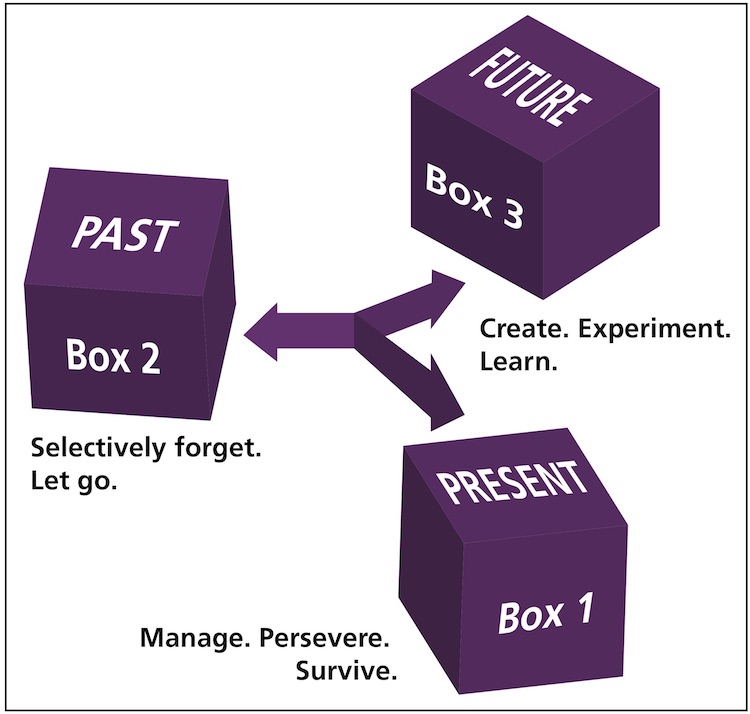
The Gap and The Gain: The High Achievers' Guide to Happiness, Confidence, and Success
I recently read The Gap and The Gain, by authors Dan Sullivan and Dr. Benjamin Hardy. In this book, they introduce a powerful mindset shift that can transform the way we measure success in any aspect of life. They argue that people tend to focus on the gap between where they are and their ideal. This comparison trap often leads to frustration and unhappiness. Instead, they advocate focusing on the gain, measuring how far one has come rather than how far there is to go. “Always measure backwards” is a principle that has profound implications for music educators, studio owners and performers alike. By shifting our perspective from what is lacking to what has been achieved, we can foster greater motivation, resilience and long-term success.
The Entrepreneurial Mind
"Failure is simply an opportunity to begin again, this time more intelligently." —Henry Ford
Five Numbers to Know in Your Business
Business finance experts have countless metrics and complex ratios for tracking a business’s performance and financial health. But for the busy studio, a few studio metrics stand out because they strike a balance between simplicity and usefulness.
Studio Strategic Planning
As creative, entrepreneurial-minded teachers, we are very good at studio organization—policies, scheduling, curriculum. Whether starting a new studio or revitalizing an existing studio, attention to these details is essential for success and largely under our control.
Smart, Single, Successful! Making a Living as an Independent Music Teacher
How can I make a living as an independent teacher?" To answer this question, three young professionals shared their stories at the 2011 MTNA National Conference during the session "Smart, Single, Successful! Effective Business Strategies For Young Professionals." We met Kristin Yost in a previous column, "Earn $100,000 As An Independent Teacher? Yes!" (April/May 2010). In the October/November 2011 issue, we met Becky Baker, a young professional in Indianapolis. In this issue, we'll meet the third panelist, David Husser, who has followed a different path to creating an independent studio. Veteran teachers interested in succession planning will find his story of interest too.
Smart, Single, Successful! Effective Business Strategies for Young Professionals
When I ask college students and young professionals what business topic they most want to know more about, it’s often, “How can I make a living as an independent teacher?”
Smart, Single, Successful! Common Threads
Excellence in business rarely happens by accident. Consider the three young professionals in recent columns that I characterized as "smart, single and successful."
Rethinking Budgeting Shifting from Allocation to Aspiration
Most musicians are necessarily familiar with budgeting. We typically think of it as an allocation practice: the daily decision-making process of how to spend the money you have on hand. Take groceries, for example,the moment you begin drafting a shopping list, you are budgeting by allocation. Whether or not you write down the exact amount of money you are willing to spend, you likely have a general assumption of your limits and which items you need versus the ones you just want to buy.
Quality First: Embracing the Power of Bundled Value
When building a business, it is so easy to chase quantity. Adding up the number of additional students, gigs or classes you need to take on to hit a target income goal is pretty simple. The hidden problem, though, is that our time is inherently limited. Rather than focusing on the volume of output, we should focus on healthy margins—what you take home after all the costs of doing business are covered. If you need to generate, say, 25% more income without working 25% more hours, you need to figure out how to position added value that will justify what you believe is a fair price. This is especially true while bridging an income gap or improving your personal savings rate. There is one fundamental question to consider when exploring how to build and sustain margin: What are all the types of value you can offer?
Put Me In, Coach! Part 2
Running a business takes a village. Your village might already include a tax accountant, attorney and website designer. Consider adding a business coach if you are unable to see a clear path forward, need accountability, feel overwhelmed or simply want to develop new skills. “Even superheroes don’t do it alone. Everyone needs collaboration and advice to conquer the world.” (Sahai, 2017)
Put Me In, Coach! Part 1
Jennifer felt stuck on how to thrive and not just survive. Laura needed to spruce up her job application materials; she also sought guidance when launching a new studio. Natalie wanted financial planning help before investing in physical studio space. Auksuole sought clarity as she restructured her studio and teaching philosophy. Alyssa desired a full-time career instead of a part-time studio income. What do these teachers have in common? They are successful business professionals, and at critical junctures, they sought guidance from a business coach.
Profit First, by Mike Michalowicz
Many teachers who want to set out on their own worry about how they are going to make money. After rent, bills and supply expenses, there is not much left to pay yourself, let alone if you want to run a multi-teacher studio and must pay employees. What if you could reverse your system, and instead of paying yourself with whatever is left over, pay yourself first and make a profit? Profit First by Mike Michalowicz offers practical, well-planned steps and exercises to assist entrepreneurs in their quest for financial security.
Possibilities in a Tough Economy
Whether a young professional just starting out or an experienced teacher relocating to a new area, a bleak economy treats everyone the same. It's hard to make a living.
Possibilities in a Disrupted Economy
Economic changes typically happen over months or years, not weeks or days. No amount of planning could have predicted an unprecedented, once-in-a-lifetime, disruptive event like the coronavirus pandemic.
Never Lose a Customer Again: Turn Any Sale Into Lifelong Loyalty in 100 Days
Is it Time to Hire an Assistant?
As music teachers and studio owners, we often wear many hats. We plan lessons, research new music, answer phone calls and emails, maintain our websites, do bookkeeping, keep up with social media, promote new programs, practice, attend conferences and workshops, plan recitals and more. Overwhelmed? Overscheduled?
The Why, What and How of Diversifying Income
How many times have you been advised “don’t put all your eggs in one basket” or told that “variety is the spice of life?” My tuition fees are part of my overall income “pie,” but other slices include a church position, adjunct collegiate teaching, accompanying and speaking engagements. How many ways can you divide the pie? And why should you?
Studio Refresh! Essential Business Topics to Revisit Annually
Times change, but strong business practices never go out of style. An annual refresh keeps a studio vibrant, relevant and meeting the needs of students and parents. Compiled by the MTNA Business Network, the highlights important studio topics that warrant regular review. Follow along as we explore these key studio topics in more detail.
Step-by-Step Guide to Launching a Diversified Revenue Stream
Diversifying revenue through coaching or other professional services, such as marketing consulting, website design or social media engagement, creates a sustainable business model for long-term success. Get started with seven proven steps.
Five Steps for Creating a Financial Plan
1. Set Clear Financial Goals
Creating a financial plan is a crucial aspect of managing your money effectively, regardless of your age or career stage as a music teacher. Certain principles remain relevant for all teachers.
In Search of Excellence
How do we define excellence in our profession? Certainly high quality teaching and performing are major components. So is professionalism, which was discussed in a previous column ("It's All Your Business: Towards a Higher Definition of Professionalism," August/September 2007 AMT ). I would also include high levels of quality in the business aspects of our profession in this definition. With the season of resolutions upon us, I challenge us to seek a higher level of excellence in the business areas of our profession during the coming year.
How to Create a Studio Budget
Running a private studio is both an art and a business. While most teachers spend years refining their pedagogy, far fewer devote time to building a financial structure that supports their work. Without a working budget, even experienced educators can find themselves stretched thin, unsure where their income is going, or reluctant to raise rates. A clear financial plan offers more than just numbers. It provides direction, stability, and the confidence to grow your studio with intention.
How I Made $100,000 My First Year as a Piano Teacher and The Mindset of a $100,000 Piano Teacher
Kristin Yost has long been a trailblazer in the world of independent piano teaching, offering innovative strategies for teachers seeking not only financial success but also personal fulfillment in their careers.
How Do I Fund Thee? Let Me Count the Ways
My beloved project. I envision thee in all thy beauty. But whereof is the funding?
From Surviving to Thriving: Mindset and the Ability to Earn a Good Income
Many musicians dream of a successful career, but lack the financial tools to support their creative vision. By working with money mentor and accountant Katherine Pomerantz, I learned that business and creativity are two sides of the same coin.
Every Lesson, Every Day
Professionally, how do you describe yourself? Fill in the blank: I am a ____.
Earn $100k as an Independent Teacher? Yes!
At a conference last summer, I was intrigued by the title of Kristin Yost’s session, “How I Made $100,000 My First Year as a Piano Teacher.” Yes, you read that correctly. Kristin did indeed earn $100,000 (gross income) as an independent teacher after finish-ing her master’s degree at Southern Methodist University a few years ago. And there was no magic formula or lottery winnings involved. In listening to Kristin’s story, what I noticed was how smart, savvy and strategic she was at utilizing some very basic business principles.
A Bias for Action
I am a strong proponent of strategic planning, but savvy business professionals also have a bias for action.
8 Recession Proof Business Strategies
If you have concerns about the recent ups and downs in the economy and how you and your music students are being affected, you are not alone. With foreclosures of family homes, job losses and shrinking budgets, there is reason for concern that music lessons may be the first casualty in family cost cutting. However, this is not a time for panic, but a time for action by music educators to re-evaluate themselves and how they market their studio programs to better fit today's society. It is a time for flexibility and adaptability as teachers make a solid plan to survive and thrive in difficult financial times.
 RSS
RSS